Related
EU Omnibus Packages Part 5: Omnibus V – Simplifying EU Defense Regulation
EU Omnibus Packages Part 4: Omnibus IV — Product Regulation, Simplification, and Compliance

Athletes Disqualified at 2026 Winter Olympics Over PFAS
EU Omnibus Packages Part 3: Simplifying EU Agricultural Regulation
In 2025, the European Union began to focus on regulatory simplification to enhance its competitiveness in a challenging global market. This series looks at the various Omnibus initiatives the EU Commission will be using throughout 2026 to reduce the regulatory burden on businesses while maintaining its high standards for sustainability, transparency, and innovation.
Omnibus VI forms part of the European Commission's broader simplification agenda and focuses on reducing regulatory complexity within the European Union (EU) chemicals regulatory framework. Embedded in the EU Chemicals Industry Action Plan, the initiative aims to improve the competitiveness and resilience of the European chemical sector while maintaining high standards of protection for human health and the environment.
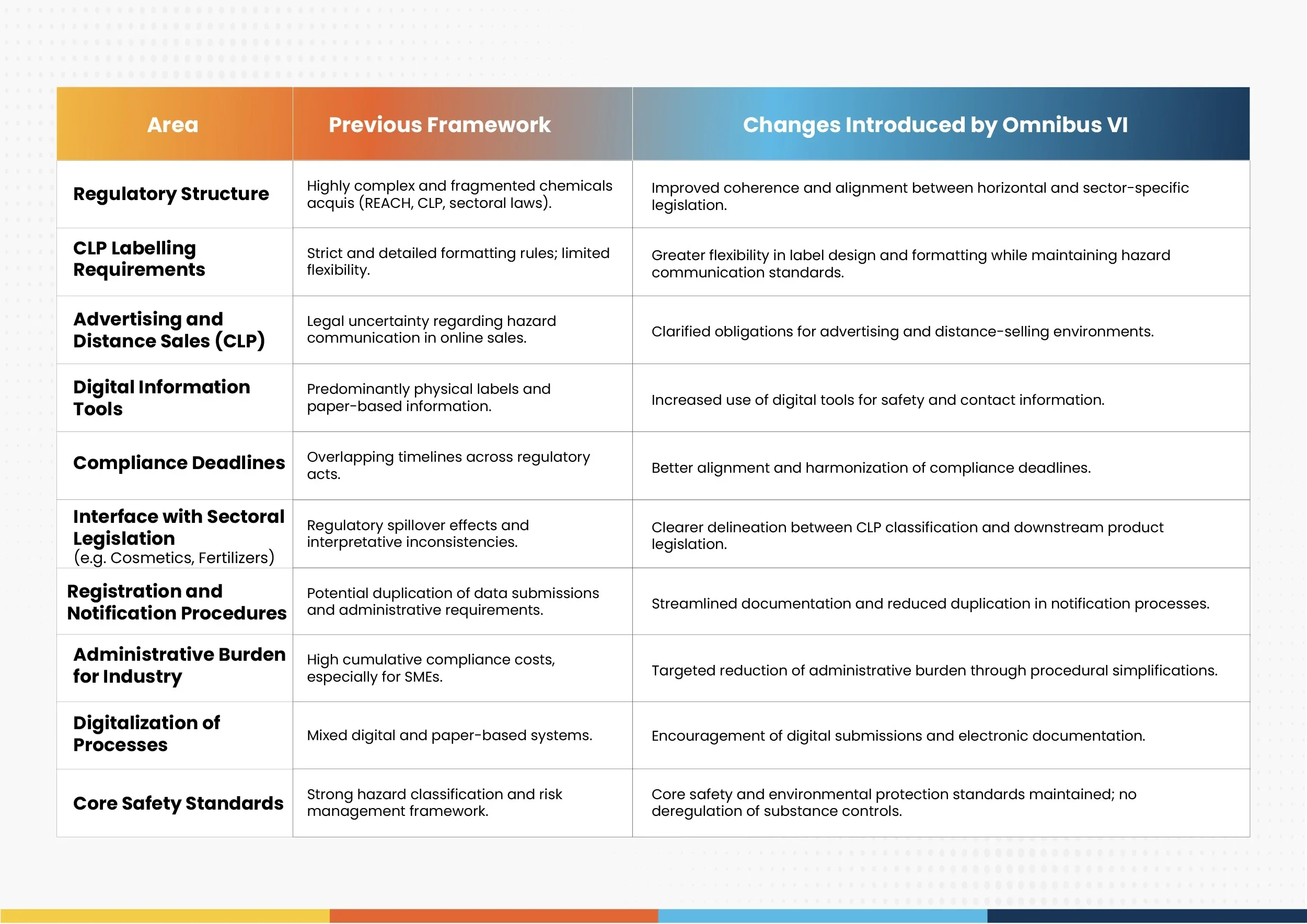
The EU chemicals acquis - primarily centered around the REACH Regulation (Registration, Evaluation, Authorization, and Restriction of Chemicals); the Classification, Labeling and Packaging Regulation (CLP); and sectoral legislation such as the Cosmetics Regulation and the Fertilizing Products Regulation - has developed into a highly sophisticated and increasingly complex system. Industry stakeholders have raised concerns about regulatory overlaps, inconsistent timelines, duplicative data requirements, and cumulative compliance costs. Omnibus VI addresses these issues through targeted amendments rather than structural deregulation.
A central focus of the package is the simplification of labeling and information requirements under the CLP Regulation. Measures include greater flexibility in label formatting, clarification of advertising and distance-selling obligations, and increased use of digital tools to provide safety and contact information. The initiative seeks to reduce logistical and administrative burdens while preserving transparency and hazard communication standards.
Omnibus VI also aims to improve coherence between different chemical regimes. Interfaces between CLP classifications and downstream legislation - such as cosmetics, fertilizers, and other product-specific frameworks - are clarified to reduce legal uncertainty and avoid unintended regulatory spillovers. In addition, certain procedural requirements and compliance deadlines are better aligned to avoid overlapping obligations.
Another key element is the reduction of administrative duplication, particularly in registration and notification procedures. By streamlining documentation requirements and encouraging digital submissions, the package seeks to lower compliance costs for manufacturers, importers, and downstream users, including small and medium enterprises (SMEs).
Importantly, Omnibus VI does not weaken core safety mechanisms. Hazard classification principles, risk management measures, and enforcement powers remain intact. Instead, the initiative focuses on improving proportionality, predictability, and operational efficiency within the existing regulatory architecture.
Overall, Omnibus VI represents a calibrated effort to modernize EU chemicals regulation. By enhancing legal clarity, reducing administrative burdens, and improving regulatory coherence, the package aims to support innovation, secure supply chains, and strengthen the global competitiveness of the European chemical industry while upholding the EU's high environmental and health protection standards.
For more information, you can read the other articles in this series:
- EU Omnibus Packages Part 1: A New Phase of Regulatory Simplification
- EU Omnibus Packages Part 2: Strengthening Investment Through Simplification
- EU Omnibus Packages Part 3: Simplifying EU Agricultural Regulation
- EU Omnibus Packages Part 4: Omnibus IV - Product Regulation, Simplification, and Compliance
- EU Omnibus Packages Part 5: Omnibus V – Simplifying EU Defense Regulation


Insights straight to your inbox
Sign Up NowMaterial Compliance Specialist
Daniela Michaelis
Daniela Michaelis is a Material Compliance Specialist on 3E's Expert Service Team, and is based in Germany.

Related Resources
News
EU Omnibus Packages Part 5: Omnibus V – Simplifying EU Defense Regulation
News
EU Omnibus Packages Part 4: Omnibus IV — Product Regulation, Simplification, and Compliance
News
Athletes Disqualified at 2026 Winter Olympics Over PFAS
News
EU Omnibus Packages Part 3: Simplifying EU Agricultural Regulation