Related
EU Omnibus Packages Part 7: Omnibus VII – Streamlining EU Digital Regulation
3E Named to Fast Company’s 2026 List of the World’s Most Innovative Companies
EU Omnibus Packages Part 6: Omnibus VI – Simplified EU Chemical Regulation
EU Omnibus Packages Part 5: Omnibus V – Simplifying EU Defense Regulation
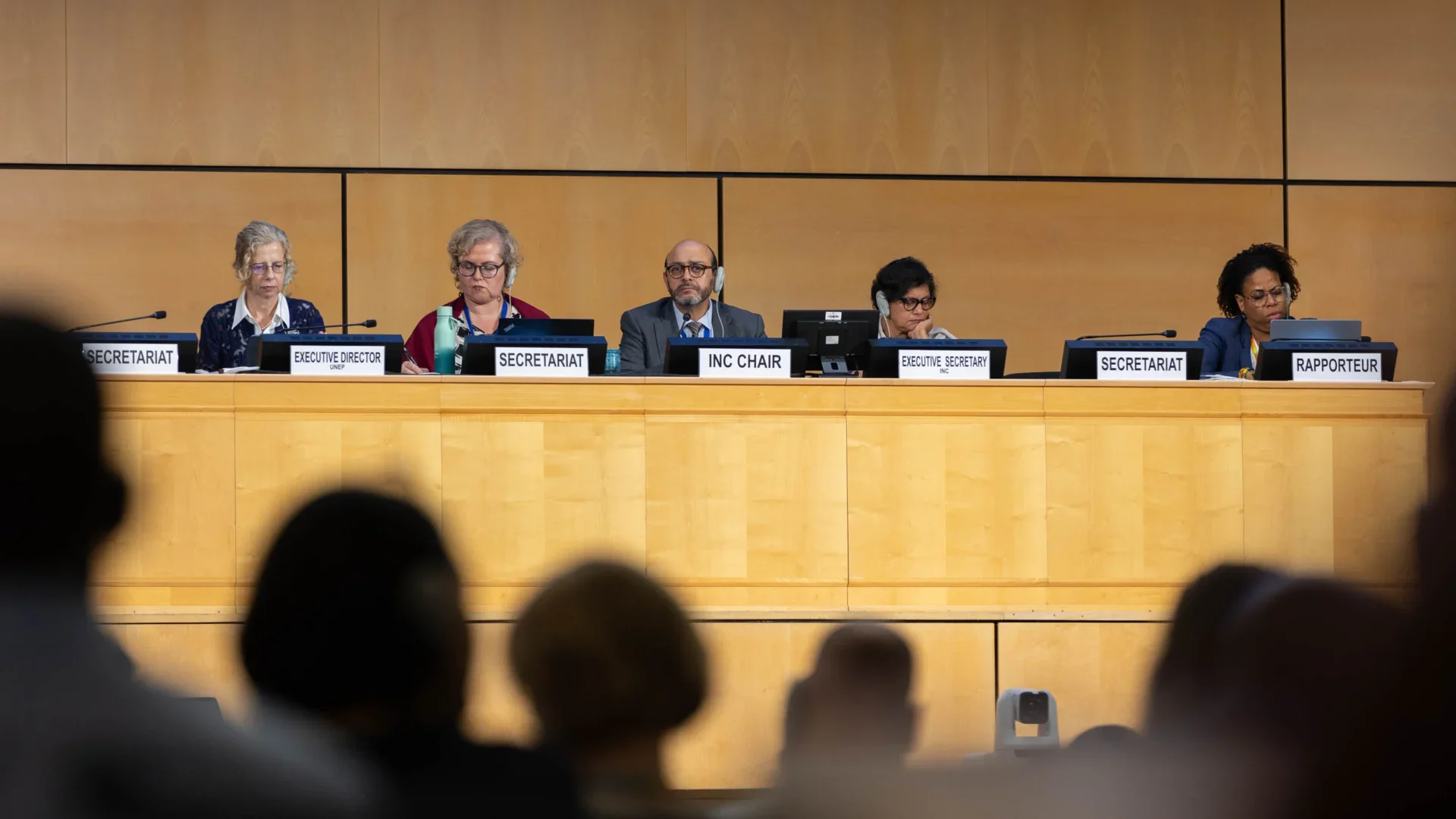
Negotiations at the Intergovernmental Negotiating Committee (INC) 5.2 in Geneva have ended without an agreement on plastic pollution. Countries remain deadlocked over issues including restrictions on production, plastic reduction, and recycling.
Chair Luis Vayas Valdivieso presented two potential drafts to be used as the basis of negotiations during the session, with neither one receiving approval from delegates.
A high-ambition coalition of countries wants to reduce global plastic production to address the problem of plastic pollution in the environment. However, countries like Saudi Arabia, for whom production of petroleum-based plastic is a critical part of their economy, consider reductions out of scope for the negotiations and are pushing instead for better waste management and recycling programs to reduce pollution.
The new drafts tabled by the chair did not address a potential production cap for plastic, though they did recognize that current levels of production exceed the capacity of waste management programs and referred to them as “unsustainable.”
The reaction to the failure has been one of frustration.
“The inability to reach an agreement in Geneva must be a wake up call for the world: ending plastic pollution means confronting fossil fuel interests head on,” said Greenpeace Head of Delegation to the Global Plastics Treaty negotiations and Global Plastics Campaign Lead for Greenpeace USA Graham Forbes in a press release. “The vast majority of governments want a strong agreement, yet a handful of bad actors were allowed to use process to drive such ambition into the ground. We cannot continue to do the same thing and expect a different result. The time for hesitation is over.”
Failure Today but Hope for Tomorrow
While INC 5.2 ends without an agreement, Executive Director of the United Nations Environment Programme (UNEP) Inger Andersen expressed hope that the setback is only a minor step backwards on a journey that will eventually end in a treaty, while emphasizing the high stakes of addressing plastic pollution.
“This has been a hard-fought 10 days against the backdrop of geopolitical complexities, economic challenges, and multilateral strains,” said Andersen in a statement from UNEP. “However, one thing remains clear: despite these complexities, all countries clearly want to remain at the table. While we did not land the treaty text we hoped for, we at UNEP will continue the work against plastic pollution – pollution that is in our groundwater, in our soil, in our rivers, in our oceans and yes, in our bodies.”
INC 5.2 had over 2,600 participants from 183 countries, including over 1,400 member delegates and more than 1,000 observers and lobbyists representing the plastics industry.
Researchers say that plastic production has doubled over the last two decades, reaching 450 million tonnes in 2019.
About 82 million tonnes of plastic becomes waste each year through mismanagement and litter. Of that figure, 19 million tonnes leaks into the environment, with 6 million tonnes going into rivers and coastlines. Plastics production is also responsible for about 3% of global greenhouse gas (GHG) emissions each year.


Insights straight to your inbox
Sign Up NowReporter
Graham Freeman
Graham Freeman is based in Toronto, where he covers ESG and sustainability news. Graham has been a content and technical writer in the technology industry for more than a decade. He has also worked as a professor and lecturer at Queen’s University, the University of Toronto, and George Brown College.

Related Resources
News
EU Omnibus Packages Part 7: Omnibus VII – Streamlining EU Digital Regulation
News
3E Named to Fast Company’s 2026 List of the World’s Most Innovative Companies
News
EU Omnibus Packages Part 6: Omnibus VI – Simplified EU Chemical Regulation
News
EU Omnibus Packages Part 5: Omnibus V – Simplifying EU Defense Regulation