Related
Concerning REACH Violations: ECHA Exposes Import Compliance Shortfalls
EU Omnibus Packages Part 8: Omnibus VIII – Streamlining EU Environmental Regulation

3E Launches AI Platform and Comprehensive AI Solution Suite, Bringing Trusted Intelligence and Workflow Acceleration to Product Compliance
Changes Coming to EU Sustainable Finance Regulation
Diplomats from around the world have gathered in Geneva, Switzerland, to attempt to reach a plastics treaty that will satisfy stakeholders who are, at the moment, very far apart from a mutually agreeable position.
The Intergovernmental Negotiating Committee (INC) on Plastic Pollution session 5.2 began August 5 and runs until August 14, 2025. The first part of the fifth session (INC 5.1) took place in Busan, Republic of Korea, from November 25 to December 1, 2024. INC 5.1 was intended to be the final conference, with a binding treaty as its result, but negotiations broke down, requiring this “final” session in Geneva.
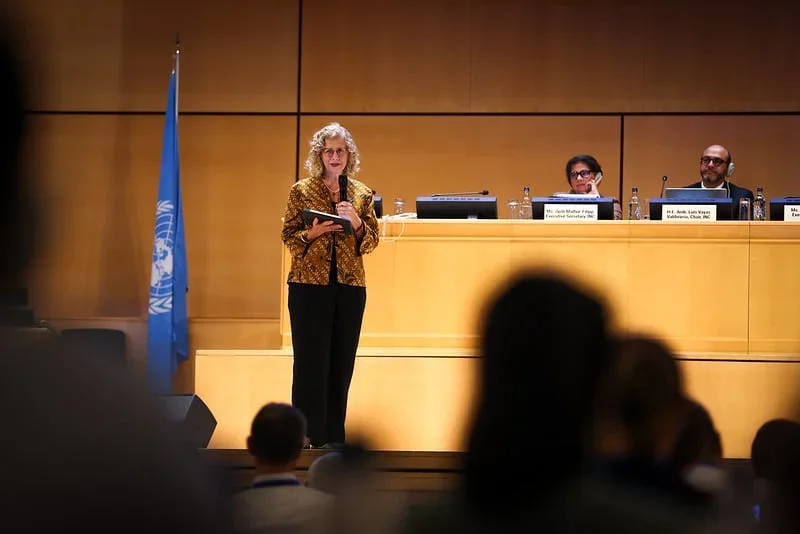
“You face ten days of intensive negotiations,” said Executive Director of the United Nations Environment Programme (UNEP) Inger Andersen in her opening remarks. “You know that you will have to work hard and with determination, as you have done before. You know that you will have to work in the spirit of solidarity and compromise, as you have done before. But I believe you can leave Geneva with a treaty.”
Optimism Runs Into Reality
Andersen's optimistic outlook belies the tensions, hostility, and obfuscation that marked the previous meeting in Busan, which closed without a treaty.
The point of conflict is whether efforts should focus on reducing plastic production or improving circular systems that support recycling and effective waste disposal. A coalition of nearly 100 high-ambition countries wants a gradual phase-out of plastic production, saying that of the 8 billion tons of plastic that has been produced since 1950, less than 10% has been recycled, with the rest of it dumped in the world's oceans, rivers, and landfills, where it causes significant damage to ecosystems. As a petroleum product, critics also say that plastic production is responsible for 5% of global emissions of greenhouse gas (GHG) into the atmosphere, which contributes to global warming.
On the other side, oil-producing nations like Saudi Arabia, Russia, and Iran, as well as thousands of oil-industry lobbyists at the meeting, have steered discussions away from production limits towards better recycling and waste management solutions. For many of these nations, a production limit could have serious economic consequences. The U.S. under President Trump opposes production limits and has reportedly lobbied several countries to resist such attempts to impose production limits prior to the meeting in Geneva.
In her opening remarks, Andersen thanked the delegates for their ongoing negotiations since Busan through informal meetings and regional consultation groups, while acknowledging the fraught relationships and divergent positions that have been obstacles to compromise.
“Now, I do accept that this path is narrow and precarious, with a steep drop on either side,” said Andersen. “But we are here in the Alps and when you walk a precarious path, you walk together. And indeed, you are bound together as you navigate this path. Because the only way to reach the destination is by going together.”
Path Towards Compromise
Since INC-4 in April 2024, delegate positions have been compiled into a massive text, with thousands of bracketed amendments reflecting the disparate views of different countries. Prior to the Busan conference, INC Chair Luis Vayas Valdivieso produced a streamlined text to act as a catalyst to the stalled discussion. This summary text was the cause of yet more conflict, as delegates sparred over whether it was an acceptable representation of all the diverse positions.
Finally, as Busan concluded, delegates agreed that the chair's text will provide the basis for further discussions in Geneva.
The 22-page text includes articles addressing plastic-product design, requirements for a circular economy, sustainable production, plastic waste management, and existing plastic pollution. The text's stated objective for the convention is “to protect human health and the environment from plastic pollution, including in the marine environment,” with the parenthetical addition “based on a comprehensive approach that addresses the full life cycle of plastics” still up for debate among the delegates.
Notably, the text mentions “emissions” only once. It appears in one of the contested definitions for plastic pollution as “all emissions and releases resulting from plastic production, use, waste management and leakage from different sources and pathways.” There are no references in the text to the impact of emissions from plastic production on climate change, and the term “climate” does not appear.
Andersen encouraged delegates to draw inspiration from the establishment of the Intergovernmental Science-Policy Panel on Chemicals, Waste, and Pollution on June 20, 2025. The panel was created to provide countries with scientific advice on chemicals, waste, and pollution by conducting global assessments and encouraging governments to include complex science in national decision-making.
“By agreeing on this panel just two months' ago, member states proved yet again that environmental multilateralism delivers,” said Andersen. “Now it is your turn.”


Insights straight to your inbox
Sign Up NowReporter
Graham Freeman
Graham Freeman is based in Toronto, where he covers ESG and sustainability news. Graham has been a content and technical writer in the technology industry for more than a decade. He has also worked as a professor and lecturer at Queen’s University, the University of Toronto, and George Brown College.

Related Resources
News
Concerning REACH Violations: ECHA Exposes Import Compliance Shortfalls
News
EU Omnibus Packages Part 8: Omnibus VIII – Streamlining EU Environmental Regulation
News
3E Launches AI Platform and Comprehensive AI Solution Suite, Bringing Trusted Intelligence and Workflow Acceleration to Product Compliance
News
Changes Coming to EU Sustainable Finance Regulation