Related

Consumers, Industry, and Researchers Agree: TSCA Needs Reform

Before the Restriction: Reading Chemical Regulatory Signals

Horizon Scanning: Moving From Restricted Lists to Regulatory Intelligence

Why product stewardship belongs in the business strategy conversation


Shutdowns have long been - and remain - a process-safety blind spot.
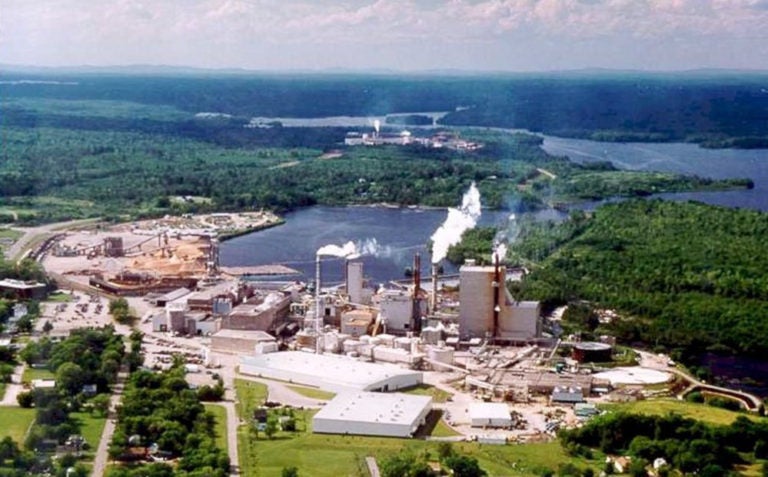
A fatal January 2026 hydrogen sulfide release at Woodland Pulp in Baileyville, Maine, in the U.S. illustrates a recurring process-safety problem: Industrial facilities may be most vulnerable when they are not operating normally. During a market-driven shutdown, altered flows at the facility caused sulfuric acid and sulfur-containing process fluids to generate hydrogen sulfide. Shutting down a scrubber eliminated a key gas-removal mechanism, while process openings allowed the gas into occupied areas.
Not surprisingly, tragedy struck. Two young employees who were working on the second floor on an equipment-drawing project unrelated to the shutdown were near several gas-release points. One was a 20-year-old chemical engineering co-op student and the other was a 26-year-old chemical engineer who had only recently joined the company. As gas crept into their location, both collapsed. Ten other employees were exposed, with some reporting burning eyes and throats and headaches.
The two employees on the second floor were not found until about 6:15 p.m., more than three hours after the gas had dissipated. Kasie Malcom, the co-op chemical engineering student, died January 28, 2026, and Allen Hornberger, the chemical engineer, died February 16, 2026, after being taken off life support.
Shutdowns Are Becoming a Process-Safety Stress Test
The Woodland Pulp fatalities show how altered process conditions, disabled safeguards, and routine work can combine to create unexpected hazards when facilities move outside normal operations. From energy-driven shutdowns to maintenance turnarounds and unplanned outages, operating disruptions are putting management of change (MOC), hazard detection, and emergency preparedness to the test.

The U.S. Chemical Safety and Investigation Board (CSB) is now examining MOC, maintenance, operating procedures, hazard identification, gas detection, and access control at the facility.
“Although our investigation is still ongoing, it already is clear that this terrible tragedy should never have happened,” said CSB Chair Steve Owens, in an incident investigation update. “The two young employees who died were not provided with personal hydrogen sulfide monitors that would have alerted them to the presence of the toxic gas, and there were no hydrogen sulfide detectors installed in the building where the release occurred. The company also did not keep track of who was in the building and where they were during this horrible event. As a result, the two young employees were not found until hours after the release ended, leaving them exposed to the highly toxic gas without assistance.”
CSB's Investigation: The Dominoes Fall
At Woodland Pulp, which was founded in 1904 and is one of Maine's largest remaining paper mills, an acid sewer carries liquid waste from the bleach plant in the kraft mill to the facility's wastewater treatment plant. A section of the more than 1,000-foot pipe slopes upward, allowing liquid to accumulate before continuing downstream. The sewer frequently receives high-pH process fluids containing sulfur compounds. Woodland Pulp adds sulfuric acid to control pH, but when the acid mixes with high-pH sulfur-containing fluids, it can generate highly toxic hydrogen sulfide gas. Under normal operations, a bleach plant scrubber removes small amounts of the gas. (3E reached out to Woodland Pulp for comment but has not heard back from the company.)
On January 26, 2026, the day prior to the incident, managers at Woodland Pulp decided to shut down most of the mill due to a large increase in the price of natural gas, which caused significantly higher operating expenses. That was the first domino to fall.
Early the next morning, operators began draining bleach plant equipment, sending high-pH sulfur-containing fluids into the acid sewer. Around 4 a.m., a pH probe near the wastewater treatment plant detected the elevated pH and automatically increased sulfuric acid addition. Because the probe was located well downstream of the pipe's upward transition, accumulated process fluids took longer to reach it. The probe continued detecting high pH and calling for more sulfuric acid, which reacted with sulfur compounds in the sewer and generated hydrogen sulfide. That was the second domino.
At about 11:40 a.m., workers turned off the bleach plant scrubber fan as part of the shutdown. Without the scrubber operating, hydrogen sulfide traveled through connected piping into two process vessels elsewhere in the kraft mill and escaped through equipment openings into the building: the third, fatal domino.
The CSB's investigation update notes that at Woodland Pulp:
- There was no system for controlling or accounting for personnel present in the kraft mill building, or their locations, during the unit shutdown.
- There was no system for providing ventilation in the kraft mill building during either normal operations or shutdowns.
- There were no stationary hydrogen sulfide detectors or alarms in the bleach plant area of the kraft mill, and the company neither provided nor required employees to wear personal hydrogen sulfide monitors.
“Our investigation update notes that Woodland Pulp was aware of the hazards associated with hydrogen sulfide gas forming in the acid sewer piping, but despite this knowledge, the company did not have adequate systems in place to monitor or mitigate the hazards. This safety gap likely led to the severity of this tragic incident,” said CSB Board Member Sylvia Johnson.
A longtime employee told the Bangor Daily News that he had been requesting hydrogen sulfide monitors since he started working at the mill 27 years earlier.
Berman & Simmons attorney Elizabeth Kayatta represents Kasie Malcom's mother and Allen Hornberger's parents. “The Chemical Safety Board's update is clear: neither Kasie nor Allen had anything to do with causing the toxic gas release. These two boys were casualties of a corporate culture that prioritized profits over people. Many questions still remain about the shocking disregard for safety that developed at Woodland Pulp while under the ownership of International Grand Investment Corporation,” said Kayatta in a blog post on the law firm's website.
The CSB's investigation is ongoing as investigators continue to gather facts and analyze several key areas related to the incident, including:
- Hydrogen sulfide detection, alarms, and response
- Kraft mill personnel access control
- The site's process safety practices, including operating procedures, identification and control of hazards, management of change, maintenance practices, and investigation of process incidents.
The U.S. Occupational Safety and Health Administration (OSHA), meanwhile, has completed its investigation and proposed fines of $794,456 in penalties for the January incident as well as for a second incident on March 7, 2026, in which a chemical fire at Woodland Pulp started after the employer released 4,400 gallons of 50% hydrogen peroxide that mixed with wood pulp that had accumulated on the ground. The company has contested the 10 serious and willful OSHA violation notices stemming from the fatal January incident, as well as two violation notices, one serious and one willful, stemming from the March 2026 incident.
The January 2026 incident - coupled with earlier and subsequent Woodland incidents during an outage and restart - raises a larger question for chemical manufacturers: Are shutdown, turnaround, and startup risks being managed with the same rigor as normal production, particularly at processes that fall outside formal OSHA process safety management coverage?
“Of the tens of thousands of investigations OSHA does each year nationwide, it typically issues only a few hundred willful serious-level violations,” said Kayatta, the attorney for the families of Malcolm and Hornberger. “The fact that there were four issued out of this single incident … that's very significant here.”
MOC: Change and Who Needs to Know
For Faisal Khan, Ph.D., director of the Mary Kay O'Connor Process Safety Center at Texas A&M University, one of the greatest vulnerabilities during shutdowns, startups, maintenance, and other non-routine operations is the disconnect between changes planned by management and the understanding of workers on the plant floor of what will happen.
During normal operations, Khan noted, processes are continuously monitored by operators, supervisors, engineers, and others. When a unit is shut down for maintenance or a turnaround, responsibility may shift to a smaller group that can include outside contractors focused on specific tasks without understanding the broader process. The disconnect can become particularly dangerous when the facility returns to operation.
“History has given us enough indications that most of [the] unpleasant scenarios, the undesirable situations, actually arise during a startup or shutdown operation, simply because of lack of this connectivity,” Khan explained to 3E.
Proper MOC should provide that connectivity, but Khan cautioned that companies can have a well-documented, compliant MOC program without effectively communicating how a change alters conditions throughout a facility. “We tend to believe that because we have now documented it, it is known [and understood],” Khan said. “Which is a very … crude assumption.”
Instead, MOC should prompt discussion with everyone potentially affected by a shutdown, maintenance activity, disabled safeguard, equipment change, or other departure from normal operations - not just the employees directly performing the work.
“The people on the shop floor need to know. The operator next door needs to know,” Khan said.
That does not necessarily mean every identified problem that shuts down a line or triggers some type of maintenance or out-of-the-ordinary event requires an immediate, expensive engineering solution. Khan acknowledged that companies operate under financial and operational constraints. But when a permanent fix cannot be made immediately, organizations still need to understand the vulnerability, communicate it, and establish measures that allow the facility to operate safely until it can be corrected.
Ultimately, Khan said, an effective MOC program must be more than a compliance exercise. Changes and their potential consequences should become part of routine conversations among managers, engineers, operators, contractors, and other affected workers.
“To really prevent anything, this must go beyond compliance. It needs to become a source of interaction and conversation; it needs to become part of the culture,” Khan insisted.
“There Is No Silver Bullet Here”
Rob Bartlett, owner and principal consultant at Amplify Process Safety, told 3E that facilities should be considering shutdowns, startups, and other non-routine conditions during process hazard analyses (PHAs) and when developing operating procedures.
“If this is done properly, they should be considering whether these non-routine operations introduce new hazards or may need additional safeguards,” Bartlett said.

That analysis needs to be specific to the process. Facilities should consider how operators interact differently with equipment during non-routine operations, Bartlett said, as well as whether safeguards available during normal production will remain available during a shutdown, startup, or turnaround.
MOC reviews also should involve the right personnel and, when warranted, a PHA to determine whether a change could “impact other scenarios, introduce new hazards, [or] negate existing safeguards,” he said.
“There is no silver bullet here. The MOC process should be designed to minimize the risk of these non-routine operations … including having the right personnel reviewing and approving the MOCs, completing a PHA if necessary to ensure that the change does not impact other scenarios, introduce new hazards, negate existing safeguards, etc. This should be done for non-routine operations as well as normal operations,” he added.
Although not directly addressing what happened at Woodland Pulp, Bartlett also emphasized accounting for everyone who could be exposed during non-routine operations - not just employees performing the shutdown or maintenance.
“One way that we recommend facilities consider is to require a safe work permit for any work in a covered area - whether [the work is done] by maintenance, contractors, or internal personnel like engineers,” Bartlett said. “This ensures that there is communication of potential hazards and that operators know who is in their covered process areas.”
A safe work permit is a formal document authorizing specific high-risk work. Before work begins, it identifies potential hazards, establishes required safety precautions, and ensures that supervisors and workers understand the conditions under which the job can be performed safely.
According to Bartlett, companies need to treat near misses as opportunities to test whether their systems adequately address non-routine operations. Investigations should result in appropriate corrective actions, and “then it's a matter of ensuring that facilities actually follow through with implementing the corrective actions,” Bartlett said.

Industry Editor
Sandy Smith
Sandy Smith is an award-winning newspaper reporter and business-to-business journalist who has spent 20+ years researching and writing about EHS, regulatory compliance, and risk management and networking with EHS professionals. She is passionate about helping to build and maintain safe workplaces and promote workplace cultures that support EHS, and has been interviewed about workplace safety and risk management by The Wall Street Journal, CNN, and USA Today.

Related Resources
News
Consumers, Industry, and Researchers Agree: TSCA Needs Reform
News
Before the Restriction: Reading Chemical Regulatory Signals
News
Horizon Scanning: Moving From Restricted Lists to Regulatory Intelligence
News
Why product stewardship belongs in the business strategy conversation