Related

3E Launches AI Platform and Comprehensive AI Solution Suite, Bringing Trusted Intelligence and Workflow Acceleration to Product Compliance
Changes Coming to EU Sustainable Finance Regulation
EU Omnibus Packages Part 7: Omnibus VII – Streamlining EU Digital Regulation

3E Named to Fast Company’s 2026 List of the World’s Most Innovative Companies
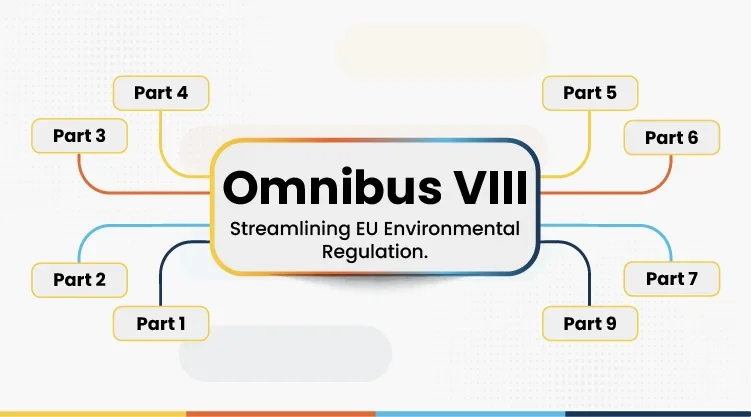
Omnibus VIII represents a further step in the European Commission's broader simplification agenda and focuses on reducing regulatory complexity. The initiative aims to improve coherence, reduce administrative burden, and enhance the practical implementation of environmental legislation while maintaining the European Union's (EU) high standards for environmental protection and supporting the objectives of the European Green Deal.
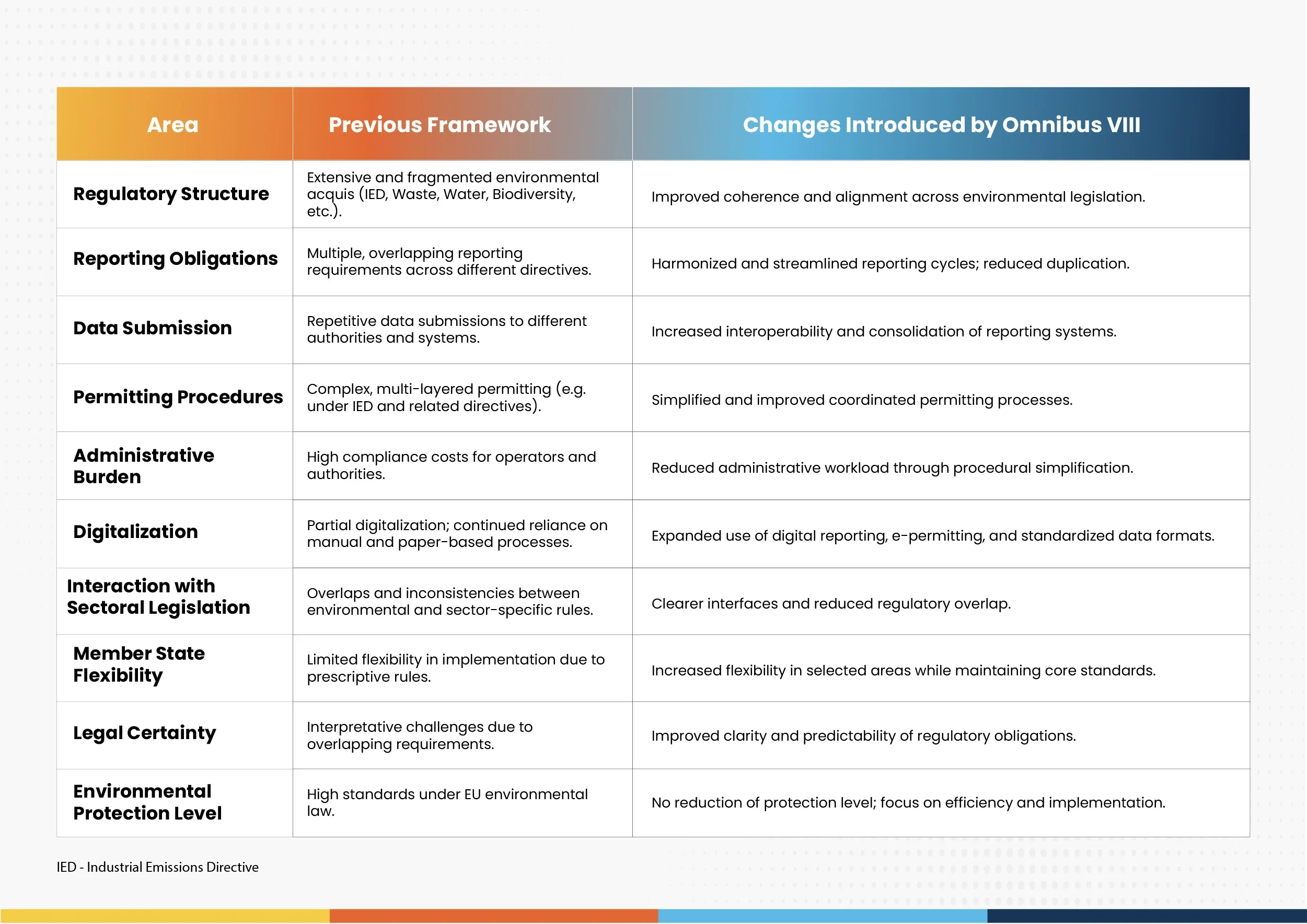
Over time, the EU has developed a comprehensive body of environmental legislation, including frameworks on industrial emissions, waste management, chemicals, water protection, biodiversity, and climate-related measures. While these instruments pursue complementary objectives, their cumulative application has led to overlapping obligations, fragmented reporting requirements, and administrative complexity, particularly for industrial operators and permitting authorities. Omnibus VIII addresses these challenges through targeted simplification and alignment measures.
A key element of Omnibus VIII is the harmonization and streamlining of reporting and monitoring obligations. The initiative seeks to align reporting cycles, reduce duplication of data submissions, and promote the use of digital reporting tools. It also aims to increase efficiency and transparency while lowering compliance costs for operators.
Another important focus is the simplification of permitting procedures under key environmental directives. Omnibus VIII promotes more coordinated and time-efficient permitting processes, including better integration of environmental assessments and reduced procedural duplication across different regulatory regimes.
In addition, the package addresses regulatory overlaps between environmental and sectoral legislation, clarifying interfaces and reducing inconsistencies that can create legal uncertainty. Greater flexibility for member states in implementation is introduced in selected areas, allowing adaptation to national and regional circumstances while preserving core environmental objectives.
Digitalization plays a central role in Omnibus VIII. The initiative supports the transition to electronic reporting, digital permits, and standardized data formats, facilitating both compliance and enforcement. This is expected to improve traceability, data quality, and cross-border cooperation between authorities.
Importantly, Omnibus VIII does not weaken environmental safeguards. Core principles such as the precautionary principle, the “polluter pays” principle, and existing emission limits remain unchanged. Instead, the focus is on making the regulatory framework more efficient, predictable, and proportionate.
Overall, Omnibus VIII represents a pragmatic effort to modernize EU environmental regulation. By reducing administrative burdens, improving regulatory coherence, and leveraging digital tools, the initiative aims to support industrial competitiveness and investment while ensuring that environmental and climate objectives continue to be achieved effectively.
For more information, you can read the other articles in this series:
- EU Omnibus Packages Part 1: A New Phase of Regulatory Simplification
- EU Omnibus Packages Part 2: Strengthening Investment Through Simplification
- EU Omnibus Packages Part 3: Simplifying EU Agricultural Regulation
- EU Omnibus Packages Part 4: Omnibus IV - Product Regulation, Simplification, and Compliance
- EU Omnibus Packages Part 5: Omnibus V – Simplifying EU Defense Regulation
- EU Omnibus Packages Part 6: Omnibus VI – Simplified EU Chemical Regulation
- EU Omnibus Packages Part 7: Omnibus VII – Streamlining EU Digital Regulation


Insights straight to your inbox
Sign Up NowMaterial Compliance Specialist
Daniela Michaelis
Daniela Michaelis is a Material Compliance Specialist on 3E's Expert Service Team, and is based in Germany.

Related Resources
News
3E Launches AI Platform and Comprehensive AI Solution Suite, Bringing Trusted Intelligence and Workflow Acceleration to Product Compliance
News
Changes Coming to EU Sustainable Finance Regulation
News
EU Omnibus Packages Part 7: Omnibus VII – Streamlining EU Digital Regulation
News
3E Named to Fast Company’s 2026 List of the World’s Most Innovative Companies