
Related

Horizon Scanning: Moving From Restricted Lists to Regulatory Intelligence

Why product stewardship belongs in the business strategy conversation

What are product compliance data silos costing you?


For many people, Canada is synonymous with the idea of nature. With 80% of the country being an uninhabited collection of mountains, lakes, forests, and tundra, Canada has long nurtured its popular image as a vast wilderness, with its leaders acting as environmental stewards who bring the wisdom of their heritage to international discussions on sustainability and the fight against climate change.
Former Prime Minister Justin Trudeau leaned into this image with a suite of sustainability policies and regulations aimed at bringing Canada into line with other countries leading the fight against climate change. This included the Net Zero Emissions Accountability Act, climate targets for 2030 and 2035, and a national consumer carbon pricing plan to help reduce greenhouse gas (GHG) emissions.
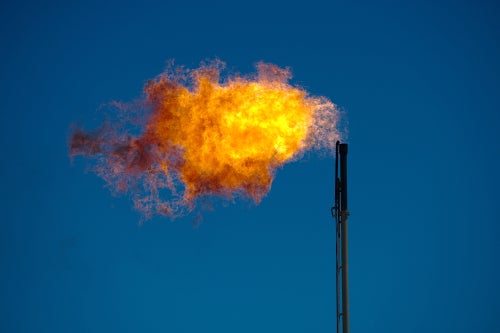
Today, however, that reputation is undergoing dramatic revisions. To meet the simultaneous challenges of economic upheaval, trade wars, and an increasingly fractious relationship with the U.S., Prime Minister Mark Carney has prioritized rapid fossil fuel development and environmental deregulation, leaving Canada's climate activists - many of whom were critical for his election - wondering if Canada is now closely following the U.S. in sidelining climate-change concerns.
Carney's Big Moves
Carney's first official act after becoming prime minister on March 14, 2025, was to cancel the consumer carbon price while keeping the industrial carbon tax in place. During Trudeau's tenure in office, the opposition Conservative Party of Canada had successfully used the potential economic impact of the carbon tax on consumers as a line of attack, which contributed to Trudeau's approval rating dipping to 22% by December 2024.
“These actions refocus federal carbon pollution pricing standards on ensuring carbon pricing systems are in place across Canada on a broad range of greenhouse gas emissions from industry,” said the government in a press release. “A price on pollution for large emitters will continue to be a pillar of Canada's plan to build a strong economy and greener future. It is a system that is fair and effective.”
On August 29, 2025, the government announced the formation of the Major Projects Office (MPO) to streamline the approvals for major infrastructure projects that could contribute to Canada's economic development. As part of Bill C-5, the new simplified process provides a one-year federal review, project authority within a single government department, streamlined regulations, and economic zones with pre-approved permitting processes.
By far the most consequential move Carney has made since coming into office has been the memorandum of understanding (MOU) with the oil-rich province of Alberta to increase production of Alberta's oil and gas resources for export to new markets. The conflict between Alberta and the federal government over resources development goes back decades, with a recent public inquiry assessing that foreign funding has played a significant role in defaming the province's energy industry. The MOU requires that Alberta submit its proposal for a new oil pipeline to the west coast to the MPO by July 1, 2026, with design and construction to commence potentially as early as September 1, 2027, to move as much as one million barrels of oil a day to ports that could supply Asian markets.
Carving Space for Environmental Protection
Infrastructure and fossil fuel development have not been the only things on Carney's mind. On March 31, 2026, the federal government announced A Force of Nature: Canada's Strategy to Protect Nature, an ambitious plan to deliver on Canada's commitment to protect 30% of its land and 28% of its water by 2030.
In a press release, Carney evoked the powerful imagery of connecting Canada's national identity to its natural landscapes.
“The beauty of Canada's nature - from lakes and forests to mountains and coastlines - is central to our history, our identity, and our way of life,” said Carney. “As Canadians, we have the responsibility to protect the lands and waters we have inherited. With unprecedented conservation efforts, the power of modern technology, and the wisdom of Indigenous traditions, our new nature strategy will protect what matters most and build a stronger, more sustainable Canada.”
In the same press release, Minister of the Environment, Climate Change, and Nature Julie Dabrusin used similar imagery, saying that “Canada's strength has always been rooted in our connection to nature. From coast to coast to coast, nature is not just part of our landscape, it's part of who we are as Canadians.”
The $3.8 billion plan provides not only protections for nature but an integrated approach to Canada's long-term strategy for economic independence and development. It has three foundational pillars:
Protect Nature. This includes funding up to 14 new protected marine areas and investing over $230 million to expand the Indigenous Guardians Program to establish a new Arctic Indigenous Guardians program to enable more Indigenous stewardship. It also provides $90 million to support the recovery of the wood bison populations along the border between Alberta and the Northwest Territories.
Build Canada Well. Data and AI will play a significant role in developing new nature strategies, including comprehensive mapping of environmental data, leveraging regional assessments to predict and mitigate environmental impacts before project reviews, and developing Canada's first national water security strategy.
Value and Mobilize Capital for Nature. The government will develop policies for accounting for nature's economic value and financial incentives to encourage nature conservation in the private sector.
Carney's Environmental Credibility at Risk
In his 2021 book Values, Carney provided a manifesto for creating a better world, including economic security from poverty, strong human rights, and environmental protection. Carney's proclamation of these values was instrumental in his ascension to the Liberal Party leadership and subsequent election to the role of prime minister in 2025.
Despite those credentials, some would argue that Prime Minister Carney is a very different person than thought-leader Carney from a few years ago. In the government discussion paper “Getting Major Projects Built,” the government proposed Federal Economic Zones that could be preapproved for infrastructure development related to telecommunications, energy, and industry, potentially bypassing existing requirements for environmental impact assessments. It also proposed giving government ministers the authority to adjust impact assessment conditions and environmental conditions to accommodate projects that are deemed in the national interest.
In an article in The Conversation, scientists with the Canadian Society for Ecology and Evolution said that Carney's plan to forego environmental assessments and potentially allow development in critical habitats would not be a positive contribution to Canada's environmental protections.
“It will build Canada at the expense of safeguarding communities and the environment,” they said. “It will risk species extinctions, and it could cause irreparable harm to the health and well-being of many communities across Canada.”
Daniel Rotman, executive director of Équiterre, said in a statement that Carney's strategy is more reactionary than visionary.
“Prime Minister Carney seems to be using every excuse under the sun as justification for his attack on the environment,” said Rotman. “The prime minister must stop using the trade war, the U.S. war in Iran or the Alberta separatist movement as excuses to dismantle environmental protections.”
Carney's vision is already costing him support from environmentalists and members of his own party. In May, Liberal Member of Parliament and former Minister of Environment and Climate Change Steven Guilbeault announced his resignation from parliament and departure from federal politics. Guilbeault was a high-profile environmental advocate, and he made no effort to conceal that his resignation was the result of Carney's economically minded approach to environmental regulation.
“He thinks that the markets are going to do it, and that governments don't have an important role to play, if only to put in place measures to attract investors and tax credits,” said Guilbeault in an interview with The Narwhal. “I think we're going to make some progress in Canada on taxonomy and disclosure, because the prime minister sees this as an important element to attract investment for decarbonization. But I don't think he sees an important role for public policy, for regulations.”
In December 2025, Catherine Abreu and Simon Donner resigned from Canada's Net-Zero Advisory Body, a group of climate experts with a legal mandate to advise the government on its climate commitments. In public testimony to the Standing Committee on Environment and Sustainable Development, Abreu said that the government had not sought the advisory body's advice, and that the current strategy will put Canada's net-zero goals out of reach.
“Politics south of the border and desire for economic growth are the reasons given for these devastating decisions,” said Abreu. “But taking a moment to look up from a narrow view of the U.S., we see the rest of the world is moving ahead on climate. It's a big risk for Canada's economy that our government has decided we won't try to keep up.”
Carney responded to the criticism by extending the public engagement period on the proposed regulatory reforms until July 22, 2026, to allow for more comprehensive feedback from stakeholders such as environmental organizations, labor organizations, and Indigenous communities, which have expressed concern that the government's pace for economic development could conflict with its treaty responsibilities.
Carney's Not So Different After All
In one sense, Carney is not an outlier. Despite its reputation as an environmental crusader, Canada is actually an emissions lagger as the only G7 nation that has failed to make any progress on its emissions since 1990.
Even with that low bar, Carney's approach has failed to please advocates on either side of the climate debate. In her public testimony, Abreu accused the government of “shredding environmental policy” and potentially violating its own law by failing to reach net-zero emissions by 2050.
On the other side, the province of Alberta - a significant producer of Canadian oil - is pushing ahead with a referendum to explore the possibility of seceding from Canada, with the federal government's alleged lack of support for Alberta's oil industry among the grievances.
With a slim majority government, Carney is having to navigate the treacherous waters of trying to satisfy both environmentalists and fossil-fuel advocates while seeking to transform the Canadian economy, reduce dependence on the U.S., and stay in office long enough to make good on his vision. What Canada might look like when he's finished could be radically different from what it looks like today.
Reporter
Graham Freeman
Graham Freeman is based in Toronto, where he covers ESG and sustainability news. Graham has been a content and technical writer in the technology industry for more than a decade. He has also worked as a professor and lecturer at Queen’s University, the University of Toronto, and George Brown College.

Related Resources
News
Horizon Scanning: Moving From Restricted Lists to Regulatory Intelligence
News
Why product stewardship belongs in the business strategy conversation
News
What are product compliance data silos costing you?