Related
What OSHA Requires in a Written Hazard Communication Program

Defensible AI: 4 reasons web-search AI gets regulations wrong

The real cost of poor SDS data quality: five risks that add up to millions

The ROI of Digital Product Passports: benefits beyond compliance
Turning the Global Framework on Chemicals (GFC) into practical action across the Asia-Pacific requires cooperation among countries with widely differing priorities, resources, and chemicals management systems.
Adopted in September 2023, the GFC is a voluntary international framework with five strategic objectives and 28 targets addressing chemicals throughout their life cycles, including products and waste. Japan published its national implementation plan in April 2025.
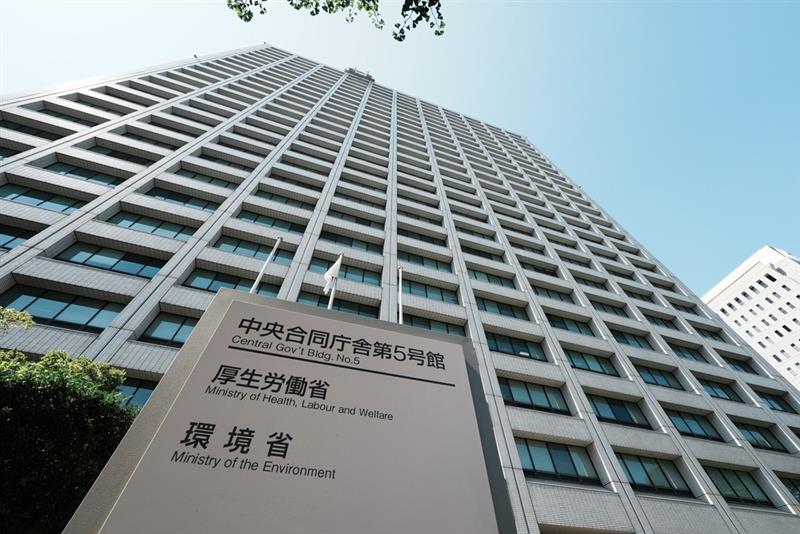
Koki Takaki, director of the Office of Mercury and International Chemicals Management at Japan's Ministry of the Environment, serves as the GFC's Asia-Pacific regional focal point. His role includes sharing information from the GFC Secretariat and coordinating views across the region. Japan also organizes twice-yearly webinars on implementation topics identified by participating countries.
The GFC's first international conference will take place in Geneva on November 16–20, 2026, focusing on implementation and measuring progress. 3E spoke with Takaki about regional challenges, Japan's priorities, and how to encourage business participation.
This interview was conducted in Japanese and has been translated and edited for length and clarity.
What makes regional coordination challenging?
Asia-Pacific is a very broad region. It includes Pacific Island countries, ASEAN (Association of Southeast Asian Nations) countries, India, and China, as well as oil-producing countries and countries in the Arab region.
Compared with regions such as Africa or Latin America, it is difficult to bring everyone together with one voice because national circumstances differ so much.
For oil-producing countries, the petrochemical industry is very important, and there may be concerns about the implications of chemicals regulation for the industry. In rapidly growing ASEAN countries, there is a need to develop legal systems alongside that growth. Countries have different backgrounds and needs.
The challenge is to identify areas where we can work together. Our approach is to share information properly and explain clearly what is happening under the GFC so that each country can make use of it. For the first international conference, we would like to bring some cohesion to the region, even if countries are only loosely aligned.

Can you give an example of practical support for GFC implementation in the region?
I think that one concrete way we have contributed is through supporting GFC implementation and helping countries make use of the fund.
No projects from the Asia-Pacific were selected in the first round of the GFC Fund in 2025. We thought that was something we needed to address, so we worked to raise awareness of the fund within the region.
In December last year, we organized a subregional workshop with the Organization for Economic Cooperation and Development, bringing together Cambodia, Laos, and Indonesia. It focused on building capacity to establish pollutant release and transfer register (PRTR) systems. Japan has operated such a system for a long time.
Following the discussions at that workshop, Cambodia and Laos applied to the GFC Fund with a project related to PRTR systems. The project was subsequently selected in the latest round.
How does the GFC add to Japan's existing chemicals management system?
Japan has already developed substantial management systems, regulations, and legal frameworks. We do not particularly envisage making fundamental changes to those through the GFC, although we will continue to consider how their implementation can be further strengthened. Our thinking is also about how to support developing and emerging countries that still need to establish their systems.
Within Japan, we are interested in how to support voluntary initiatives and activities by industry. Several targets address that, particularly under strategic objective D, which concerns promoting sustainable solutions.
We are exploring different policy instruments, especially financial approaches. In the climate field, mechanisms such as green bonds have been developed to help activities attract investment. We are interested in how similar approaches could be applied to chemicals.
How can we help develop mechanisms that encourage investment in companies seeking to advance sustainable chemistry? How can we create conditions in which companies voluntarily developing sustainable products or working on chemical substitution can attract financing and be recognized in the market? Those are questions we would like to explore through our participation in the GFC.
What would you like companies to do, and how will the ministry support them?
We would like companies to advance their work on sustainable chemistry.
We also want to provide guidance on matters such as sustainability information disclosure to investors. We hope companies will be able to use relevant tools and approaches emerging from the GFC to shift towards sustainable product development and related activities.
The aim is to create a system in which companies working on sustainable solutions and sustainable chemistry are properly recognized, attract investors' attention, and receive investment.
What will encourage companies to participate in a voluntary framework?
Participants need to feel that there is a benefit to taking part.
For industry, one important element is whether developing sustainable products can benefit the company and receive recognition in the market. If companies can see how the GFC's activities and tools help make that happen, I think it will become easier for them to participate.
We also need to explain clearly that our intention is to support and encourage voluntary activities that benefit the environment, rather than relying solely on tighter regulations through this work.
What support is most needed to advance implementation across the Asia-Pacific?
Funding is certainly one need. The creation of a dedicated GFC Fund is significant, and we would like to make good use of it.
There are other funding mechanisms, including the Global Environment Facility (GEF) and support through the Japan International Cooperation Agency (JICA). But a fund specifically for the GFC can also play an important role.
Countries can also face political difficulties or rigid government and administrative structures that make it difficult to establish systems. Those are not necessarily things we can resolve from outside. What Japan can do is share its practices and experience in ways that other countries can use.
What outcomes does Japan want from the first international conference?
A range of work has taken place in the three years since the GFC was adopted, and Japan has contributed to that preparation.
One priority is the adoption of indicators for tracking progress towards the GFC targets. We want to ensure that the indicators adopted are effective in practice.
Japan originally proposed developing these indicators when the GFC was being negotiated, and it served as a co-chair during the earlier stages of that work. We therefore feel a responsibility to remain engaged in the negotiations and see the process through.
More broadly, we want the GFC to function well, so that countries can develop their chemicals policies effectively within the framework.


Related Resources
News
What OSHA Requires in a Written Hazard Communication Program
News
Defensible AI: 4 reasons web-search AI gets regulations wrong
News
The real cost of poor SDS data quality: five risks that add up to millions
News
The ROI of Digital Product Passports: benefits beyond compliance