Related

Beyond the Chemical List: Building Regulatory Readiness Into Product Data

Consumers, Industry, and Researchers Agree: TSCA Needs Reform

Before the Restriction: Reading Chemical Regulatory Signals
Horizon Scanning: Moving From Restricted Lists to Regulatory Intelligence


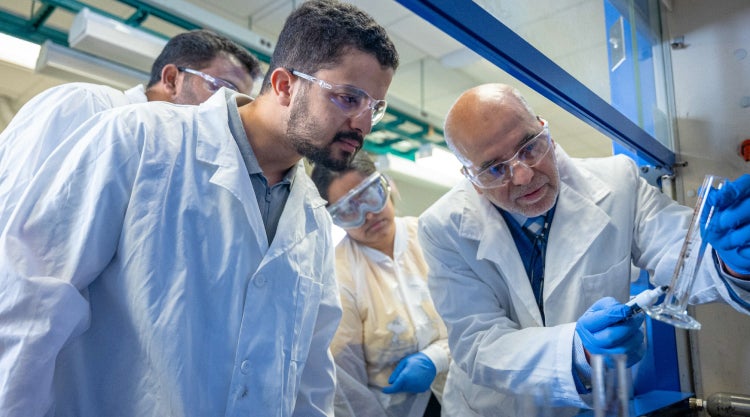
For Faisal Khan, Ph.D., director of the Mary Kay O'Connor (MKO) Process Safety Center at Texas A&M University, process safety is both a professional discipline and a personal calling.
Khan grew up in India and was a child when the 1984 Bhopal disaster occurred. Years later, when he began graduate studies in chemical engineering, he initially pursued a traditional research topic but quickly decided he wanted to understand why catastrophic industrial accidents occur and how they can be prevented.
“I wanted to understand how and why accidents like Bhopal occurred and what can be done,” Khan told 3E.
When he entered the field in the early 1990s, safety was often dismissed as little more than common sense, he recalled. After more than three decades of research and teaching, Khan sees the evolution of process safety very differently. “Three decades after I was told safety is common sense, I'm able to say confidently that that common sense has been transformed today into common science.”
That science, he said, can now be taught alongside engineering fundamentals so that engineers understand not only how to design and operate industrial systems, but also how those systems can fail and how hazards can be anticipated before an incident occurs.
Khan's work reflects that mission. The center was founded by T. Michael O'Connor in memory of his wife. Mary Kay O'Connor was an operations superintendent who was killed alongside five colleagues in an explosion on October 23, 1989, at the Phillips Petroleum Complex in Pasadena, Texas.
The center's work encompasses research, industry collaboration, technology development, workforce education, and efforts to help regulators and companies improve process safety.
Shutdowns Require a Different Level of Attention
Khan said the connection between management decisions and shop-floor implementation becomes especially important when facilities move outside normal operating conditions. During normal operations, equipment and processes typically receive continuous attention from operators, supervisors, engineers, and others. During shutdowns, maintenance, and turnarounds, responsibility may shift to a smaller group of workers, including contractors who understand their assigned tasks but may not understand how their work fits into the broader process and organization.
That creates the potential for disconnects when equipment is taken offline, altered, maintained, and eventually returned to service. That lack of communication is often cited when management of change (MOC) fails, Khan said.
Facilities must treat shutdowns, startups, maintenance, and other abnormal states as conditions requiring deliberate communication across the organization, he said, rather than assuming safeguards developed for steady-state operations will automatically remain effective. According to Khan, those deliberate conversations are a foundation of effective MOC, and that communication needs to extend beyond the employees who are doing the work or who are directly affected.
Workers who have no direct role in a shutdown also need to understand what is changing, he said, because they can still be affected by the consequences. Khan compared the concept to telling everyone in a household that a guest is coming: Not everyone may interact with the visitor, but everyone should understand that circumstances in the house are changing.
Management of Change Has to Reach the Shop Floor
One of Khan's greatest concerns is that companies can have a formally compliant MOC process without achieving the level of communication necessary to manage risk.
A shutdown or equipment change may be properly documented, assigned to the appropriate personnel, placed in company systems, and communicated through email. However, that does not necessarily mean the implications of the change have been discussed with operators and other workers who could encounter its effects.
“It might be documented, but is it known?” Khan asked. “Do workers understand what is happening and how their work will be impacted and how their work will impact the process?”

Documentation is necessary, he said, but companies need to go further by proactively discussing changes from the bottom up. Operators, nearby workers, contractors, and others should understand what equipment is out of service, what conditions are different, what safeguards may have changed, and how those changes could affect their own work.
Khan said most companies can demonstrate that MOC is taking place and that the required documentation exists. The more important question is whether they can demonstrate that the process has moved beyond compliance to become part of routine interaction among workers.
“To really prevent anything, process safety has to go beyond compliance; it must become culture,” he said.
That distinction is important for companies trying to future-proof facilities against low-frequency, high-consequence events. Management of change should not simply record what has changed; it should prompt workers to consider how the change alters hazards, dependencies, safeguards, work areas, and potential exposures across the facility.
Future-Proofing Does Not Always Require Major Capital Spending
Khan also cautioned against assuming every identified vulnerability must be solved immediately through expensive equipment modifications. Companies operate under financial and operational constraints, and some hazards cannot be engineered out at once.
What matters, he said, is that the organization understands the limitation and communicates it clearly enough to establish temporary controls, operating restrictions, or other measures until a permanent solution can be implemented. Even when equipment cannot immediately be replaced or redesigned, there would be some type of remedial action if the issue were understood throughout the organization, Khan said.
For Khan, that is another measure of an effective MOC system: It allows some flexibility so that an organization can recognize what has changed, understand the resulting risk, communicate it to everyone who could be affected, and adapt operations accordingly.
Learning From Near Misses
Khan said companies also should look at whether lessons from previous incidents and near misses become part of organizational memory: the “cultural” impact of change.
Rather than treating a near miss as an isolated event that ends when an investigation is closed, companies should talk about what occurred and incorporate the experience into future decisions. When lessons are widely shared, employees can recognize similar circumstances and challenge actions before another event escalates.
“That's the message I would like to see in the industry … because then it becomes a part of the culture,” Khan said.
A strong process-safety culture, in his view, is one in which previous mistakes and close calls remain visible enough that colleagues remind one another when similar risks begin to emerge. That institutional memory can provide an additional safeguard during shutdowns, startups, and other non-routine operations, when familiar systems and assumptions may no longer apply.
The desire to foster cultures of safety is what drives Khan's work at the MKO Process Safety Center, where he believes process safety belongs alongside the other fundamentals engineers learn before entering industry.
“Safety matters no matter what you do,” Khan said. “Saving life is a core value. How can we not have safety as an integral part of our education system?”
Industry Editor
Sandy Smith
Sandy Smith is an award-winning newspaper reporter and business-to-business journalist who has spent 20+ years researching and writing about EHS, regulatory compliance, and risk management and networking with EHS professionals. She is passionate about helping to build and maintain safe workplaces and promote workplace cultures that support EHS, and has been interviewed about workplace safety and risk management by The Wall Street Journal, CNN, and USA Today.

Related Resources
News
Beyond the Chemical List: Building Regulatory Readiness Into Product Data
News
Consumers, Industry, and Researchers Agree: TSCA Needs Reform
News
Before the Restriction: Reading Chemical Regulatory Signals
News
Horizon Scanning: Moving From Restricted Lists to Regulatory Intelligence