
Related

On GHG, U.S. EPA Rolls Back Reporting but Not Paperwork

What compliance innovators learned bringing AI into regulatory research

Beyond the Chemical List: Building Regulatory Readiness Into Product Data

Consumers, Industry, and Researchers Agree: TSCA Needs Reform


Product compliance has long meant that one must comply with regulations, demonstrate adherence clearly, anticipate changes, and adapt to new rules without compromising revenue. It’s the foundation of any risk management strategy.
Today, data management, innovations in technology, and organizational changes are changing the product compliance playing field in unanticipated ways. And the pressure to reduce costs while supporting growth is forcing compliance functions to evolve quickly.
Leading trends in the product compliance space for 2020
-
Regulatory Compliance is Reshaping Companies
-
Data protection and cyber security are top of mind
-
AI and Data Management
Regulatory Compliance is Reshaping Companies- Everywhere
Compliance needs and regulations are expanding – everywhere. Industry initiatives like IMDS in automotive or IPC-1752a in electronics aren’t new, but nearly every industry we see is following their lead in a steady march towards increased disclosure and proactive compliance.
Suppliers feel the same pinch from the increasing number and rate of change for regulations, even anticipatory regulations. We’re seeing an increase in proactive reporting and compliance data management even in industries without a clear standard.
It may be the goal of the compliance team to determine a product’s compliance against multiple regulations without over-stressing the supply chain. But suppliers are in the front lines of the information management, IP protection, and communication needs for this determination. It often falls on them to gather a full chemical composition not only to confirm safety and regulatory compliance, but to also proactively respond to emerging regulations and new chemicals of concern. All of this must be done efficiently and securely.
The result is a profound change at the organizational level – one where a regulatory driver motivates the complete overhaul of traditional, list-checking compliance functions. Investments in software that works cross-functionally are as important as building teams that have the necessary skills to manage.
Compliance teams must adjust their operations within a more integrated structure to manage new risks without disrupting the pace of business or the expansion of the data ecosystem.
Data protection and cyber security are top of mind
Public awareness for data protection and breaches remains high. Political scrutiny is also intensifying as reports of cyberattacks, surveillance, and the misuse of personal data are continually in the headlines. Most companies are aware of the brand risks associated with data breaches, which forces compliance professionals to ensure data protection is top of mind.
The focus on data privacy and cyber security is expected to lead to new state and federal rules and regulations similar to the EU’s GDPR. For example, last year’s passage of the California Consumer Privacy Act, slated to take effect in 2020, may inspire more states to enact similar laws.
Additionally, some penalties handed down for cyber breaches have been steep. And yet, many of these fines pale in comparison to the reputational damage businesses suffer after experiencing a cyber-attack.
This has moved compliance data security into this new realm of enhanced data security and privacy – something software companies need to support when creating compliance tools.
AI and Data Management
Supplier engagement and complex compliance data management challenges are surprisingly fixable with software solutions that benefit both the supplier and the manufacturer.
Technology has the ability to solve for issues like request redundancy, proprietary substance protections, and multiple standard submission. Tools like workflow automation, secure cloud services, comprehensive regulatory and hazard screening, and API integration easily overcome the manual and time-intensive processes of a few years ago.
The proliferation of AI tools like machine learning can even help take unstructured documents and fit the data into a standard BOM format that you can work with. Companies can find and manage risks more effectively by automating the scanning and indexing of unstructured data.
This pays dividends quickly. Extracting data from documents and forms through manual data entry is slow and expensive, but is also prone to errors, which compounds compliance determination issues quickly. Accuracy and lower document processing costs are metrics which suppliers can focus on in the new compliance landscape – and they are metrics which software solutions can help with immediately.
Responding to these Trends
Solutions from 3E Exchange
Software platforms like 3E Exchange work from both the supplier and disclosure side of the equation. Software solutions like this offer flexible options for protecting IP and working cross functions and supply chain levels to knit together chemical hazard management with compliance.
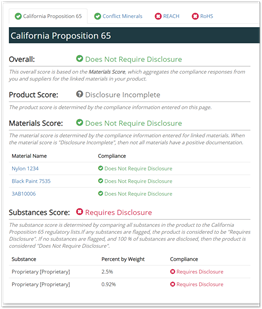
From these centralized platforms, product developers can collect complex data on the ingredients in their products. They can explore alternative, potentially safer chemicals securely and screen against particularly hazardous compounds, see if materials are Red List free and so on. Eliminating repeated emails to different suppliers – a significant benefit in and of itself – helps with data integrity and supplier relationships across the board.
A streamlined approach that supports the entire value chain from suppliers to designers, from compliance reporting to product transparency reduces costs – and helps with the new compliance landscape of 2020. But keeping all this data secure and centralized is the real win.
Discover how 3E Exchange can help with your compliance needs today
Related Resources
News
On GHG, U.S. EPA Rolls Back Reporting but Not Paperwork
News
What compliance innovators learned bringing AI into regulatory research
News
Beyond the Chemical List: Building Regulatory Readiness Into Product Data
News
Consumers, Industry, and Researchers Agree: TSCA Needs Reform